
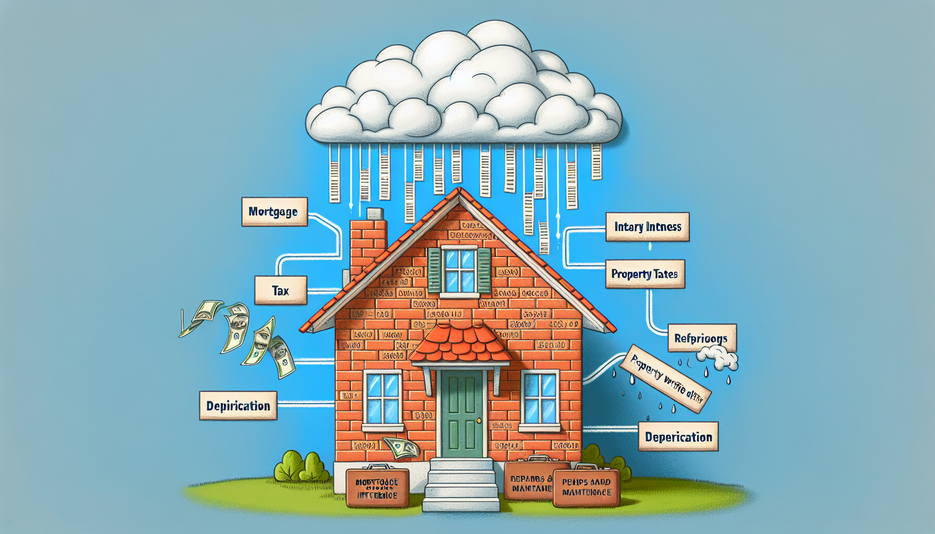
Real Estate Tax Deductions: How to Lower Your Taxable Income Through Smart Property Expense Write-Offs
Estimated reading time: 8 minutes
Key Takeaways
- Real estate tax deductions help lower taxable income by subtracting eligible property-related expenses.
- Both property investors and landlords can benefit significantly from proper expense tracking and write-offs.
- Deductions range from property taxes and mortgage interest to maintenance, repairs, and management fees.
- Keeping detailed records and consulting a tax professional are critical for maximizing tax benefits.
- Utilizing tools like accounting software and regular expense reviews can streamline the deduction process.
Table of Contents
- Introduction
- What Are Real Estate Tax Deductions?
- Key Deductible Expenses for Property Investment
- Specific Expense Deductions for Landlords
- How to Maximize Your Property Expense Write-Offs
- Reducing Taxable Income Through Deductions
- Common Mistakes to Avoid
- Conclusion & Call-to-Action
- Frequently Asked Questions
Introduction
Real estate tax deductions are special tax benefits that allow property investors to subtract certain property-related expenses from their taxable income. These deductions are essential for anyone involved in property investment or managing rental properties. By taking advantage of real estate tax deductions and reducing taxable income through deductions, both investors and landlords can secure significant tax savings. Research shows that property investors can benefit from tax write-offs, pass-through deductions, and other incentives. In today’s data-driven world, leveraging innovative research methodologies – similar to those discussed in OpenAI Deep Research: Revolutionary AI Tool Transforms Professional Research Capabilities – can help refine your overall strategy.
What Are Real Estate Tax Deductions?
Real estate tax deductions enable property investors to reduce their taxable income by subtracting expenses related to managing, repairing, and operating their properties. These tax breaks vary between rental property owners and property investors, emphasizing the importance of understanding the nuances of deductible expenses.
- They let you subtract costs such as maintenance, insurance, and mortgage interest from your overall income.
- The deductible expenses may vary depending on whether you are an active investor or a landlord.
- These write-offs play a crucial role in reducing taxable income during tax season.
For detailed examples and further definitions on qualifying deductions, visit this resource.
Key Deductible Expenses for Property Investment
Property investment involves various deductible costs that you may claim on your tax return. Knowing which expenses qualify and how they can be written off is essential for maximizing your tax savings.
- Property Taxes
- Taxes paid to your local government on property ownership are fully deductible.
- Helps investors and homeowners alike reduce taxable income.
- For additional details, refer to IRS guidelines and this article.
- Mortgage Interest
- Interest on your investment property’s mortgage is deductible.
- This expense often represents a significant portion of your payments.
- For additional insights, visit IRS guidelines and this guide.
- Insurance Costs
- Deductions may apply to various insurance premiums, including fire, flood, and liability insurance.
- These deductions help reduce your taxable profit while providing necessary protection.
- Property Management Fees
- Fees for professional management services, such as rent collection and tenant inquiries, are deductible.
- Maintenance and Repair Costs
- Routine maintenance and small repairs to keep your property safe and attractive qualify as eligible expenses.
- Utilities and Other Operational Expenses
- Costs for water, electricity, gas, and other essential services while managing the property can be deducted.
These deductions form the foundation of an effective tax strategy. For more on qualified expenses, check out this page and, for details on property taxes and mortgage interest, visit the IRS website.
Specific Expense Deductions for Landlords
Landlords can take advantage of additional deductions specifically tailored for rental properties:
- Advertising for Tenants
- Expenses incurred for marketing your rental property are fully deductible.
- Whether through online platforms, flyers, or social media, every cost that brings in tenants qualifies.
- See this resource for more details.
- Legal and Professional Fees
- Fees for services such as legal advice or accounting related to rental management can be deducted.
- This ensures compliance and efficient handling of rental agreements and disputes.
- Refer to this guide for further information.
- Depreciation of the Property
- Depreciation allows you to recover the cost of your property over its useful life.
- Residential properties may be depreciated over 27.5 years, and commercial properties over 39 years.
- Learn more at this link.
- Travel Expenses
- Travel costs directly related to managing or maintaining your rental property are deductible.
- Only expenses directly associated with property management qualify; personal expenses do not.
- For guidelines, see this resource.
By focusing on these deductions, landlords ensure every eligible cost is captured, easing tax burdens and improving financial management. Additional insights can be found at this page and this guide.
How to Maximize Your Property Expense Write-Offs
To fully leverage property expense write-offs, consider these practical strategies:
- Keep Detailed Records
- Maintain organized records of all property-related expenses, including receipts and invoices.
- Detailed records help substantiate deductions during IRS reviews.
- Similar to the efficiency discussed in Multi Agent Systems for Business Adoption, being organized is key.
- Use Accounting Software
- Utilize accounting tools designed for property management to automatically log and categorize expenses.
- This software can simplify tracking and ensure no eligible expense is overlooked.
- Compare this efficiency to the streamlined approach found in multi agent systems.
- Regular Expense Reviews
- Conduct monthly or quarterly expense reviews to ensure all costs are claimed.
- Regular reviews allow for timely adjustments and reclassification of expenses.
- Consult a Tax Professional
- Engage a tax expert specializing in real estate to navigate complex tax laws and maximize available deductions.
- Expert advice can transform your approach, similar in impact to the OpenAI Deep Research tool.
Implementing these strategies will not only protect your investments but also lead to substantial tax savings. For more in-depth strategies, visit this resource.
Reducing Taxable Income Through Deductions
A core aim of leveraging deductions is to reduce taxable income. Claiming all eligible write-offs ensures that only the net income after expenses is subject to taxation.
- How Deductions Work
- Every eligible expense is subtracted from your gross income, lowering your tax bracket.
- Hypothetical Example
- For instance, if you earn $50,000 in rental income and have $20,000 in deductible expenses, your taxable income reduces to $30,000.
- The Role of Depreciation
- Annual depreciation claims spread the property cost over time, providing a consistent deduction.
Understanding these mechanisms ensures better financial management and a more tax-efficient portfolio. Additional examples can be found at this article.
Common Mistakes to Avoid
While these deductions provide significant benefits, common pitfalls can undermine their effectiveness:
- Overstating Non-Qualifying Expenses
- Claiming major renovations or improvements as routine repairs can lead to overstated expenses.
- For guidance, review this resource.
- Mixing Personal and Business Expenses
- Ensure a clear separation between personal expenses and those related to your property investments to avoid audit issues.
- Poor Documentation Practices
- Failing to keep proper receipts and records can result in lost deductions.
- Misinterpreting IRS Guidelines
- Misunderstanding which expenses qualify can reduce the benefits of your deductions.
- Check the IRS guidelines via this link.
Avoiding these mistakes ensures that your tax benefits remain intact and fully optimized.
Conclusion & Call-to-Action
Understanding and utilizing real estate tax deductions can profoundly impact your investment finances. Whether you are an experienced property investor or a landlord just starting out, leveraging every eligible expense—from property taxes and mortgage interest to advertising and repairs—can significantly lower your taxable income.
- Real estate tax deductions ensure you are taxed only on net income after all qualifying expenses are subtracted.
- Maintaining detailed records, seeking expert advice, and regular expense reviews are essential strategies.
- Both property expense write-offs and landlord-specific deductions contribute to substantial tax savings.
We invite property investors and landlords to share their experiences and questions regarding these deductions in the comments below. If you found these insights valuable, please share this article with others who could benefit from strategically reducing taxable income.
For further guidelines and detailed resources, visit this page, the IRS website, and this resource.
Frequently Asked Questions
-
What are real estate tax deductions?
They are tax benefits that allow property investors and landlords to subtract eligible property expenses from their taxable income.
-
How can I maximize my property expense write-offs?
By keeping detailed records, using accounting software, regularly reviewing your expenses, and consulting a tax professional, you can ensure that every qualifying expense is claimed.
-
What documentation should I keep to support my deductions?
Always retain receipts, invoices, bank statements, and any other records that detail the nature and amount of the expense. This documentation is crucial in case of an audit.
