An accessory dwelling unit is the cottage, garage conversion, or attached suite people keep asking about on an Orange County lot. I am Joe Homs, California DRE 00702131. I have spent 50+ years in this market and written 8 books. Read this before anyone draws a unit or puts rent in a spreadsheet.
I am a broker, not your city planner, architect, or lender. State law sets the floor. The city, a coastal permit, and sometimes an association still get a say on that lot. Confirm the current ordinance before you spend money. These notes follow the California Department of Housing and Community Development's March 2026 ADU handbook and the code sections it cites. The public page is hcd.ca.gov/building-standards/adu.
A compliant ADU is approved by right
A compliant ADU or junior ADU is reviewed ministerially. Staff applies objective standards. There is no discretionary hearing and no neighbor vote. A city cannot deny a unit because it wants "compatibility" or "high quality materials." Those are subjective, and the statute does not allow them.
The clock is real. The permitting agency has to say in writing whether an application is complete within 15 business days. On a lot that already has a house, it has to approve or deny a complete application within 60 days, and a denial has to say what is wrong and how to fix it. If the city does not act in those 60 days, state law can treat the application as approved. That is a backstop. It is not a reason to skip the plans.
Coastal Orange County is the exception people actually hit. A coastal development permit still has to be approved or denied within 60 days of a complete application, and a certified local coastal program can require standards that an inland lot would not. A house in Laguna Beach is not the same permit as a house in Santa Ana. Ask the city you are in.
Side and rear setbacks are typically four feet
For a new attached or detached ADU, a city may require side and rear setbacks, and those setbacks cannot be more than four feet. That is Government Code section 66314. A conversion of existing living space, or a new unit built in the same place and to the same size as an existing structure, does not take a new setback. Fire access still applies. A front-yard setback can still apply.
Lot coverage and floor-area rules cannot be used to block an ADU of at least 800 square feet of interior living space that keeps the four-foot side and rear setbacks. A local size cap has to allow at least 850 square feet, or 1,000 square feet if the unit has more than one bedroom. Where the city has no compliant ordinance, the state cap for a new detached ADU is 1,200 square feet. A city can allow more. It cannot invent a smaller maximum.
A city also cannot require less than 16 feet of height for a typical detached unit on a lot with a house. Near a major transit stop or a high-quality transit corridor, that floor is 18 feet, with room for a roof pitch that matches the main house. Measure the lot. A hillside, a flood zone, a utility easement, or a septic system can still stop a plan that looks legal on a postcard.
Owner-occupancy is no longer required for an ADU
A city cannot require you to live on the property just because you built an ADU. The old sunset date is gone. Government Code section 66315 is the rule. You can own the house, live somewhere else, and rent the ADU, the house, or both, subject to the rental-term rules below.
The exception is narrow. An ADU sold separately to a qualified buyer under the condominium rules can still carry an owner-occupancy condition. Do not assume you can sell the cottage by itself. The city has to adopt that ordinance, lienholders have to consent, and an association has to authorize it in writing when one exists. Ask before you underwrite two deeds.
A junior ADU is a different product. It is built inside the walls of the single-family house, and an attached garage counts. It cannot be larger than 500 square feet. It needs an efficiency kitchen. It may share a bathroom with the house. If it shares sanitation, it needs its own outside entrance and an interior connection to the main living area, and the owner has to live in the house or in the JADU. If the JADU has its own sanitation, that owner-occupancy rule does not apply. One JADU per single-family lot. A rented JADU has to be rented for longer than 30 days.
The rent is real only after the city says yes
The upside is a second rent, a place for family, or both. Long-term rent is the use the statute is built around. A city may require rentals of 30 days or longer. Units created under the statewide minimum standards, including JADUs, have to be rented for longer than 30 days if they are rented at all. Do not underwrite nightly income from a backyard cottage. I will not put cottage rent into an offer until the city, and the association if there is one, have answered for that lot.
An association cannot hold its own hearing on the city's permit, and it cannot stall a lawful unit with a subjective design veto. It can still have objective rules that were knowable before you applied. Read them. A condo or a townhome is usually the wrong place to count on a cottage. A detached house on a single-family lot is the question worth asking.
An unpermitted room is not an income unit. It is a problem for the appraiser, the lender, the insurer, and the escrow. State law limits a city's ability to refuse a permit for some older unpermitted units when the issue is not a health and safety threat. That is a legalization path, not a reason to advertise illegal rent.
An ADU of 750 square feet or less, and a JADU of 500 square feet or less, is not charged local impact fees. A larger ADU is charged in proportion to the main house. School districts can still charge impact fees on an ADU over 500 square feet. Get the city's fee sheet before you lock a budget.
How people pay for one
Cash, a home equity line, a cash-out refinance, or a construction loan are the ordinary ways an owner pays for the work. A lender's definition of an ADU may not match the city's, so a building permit is not automatically a unit the loan will count.
FHA, Fannie Mae, and Freddie Mac have products that can count some ADU rent toward qualifying income, with their own occupancy and paperwork. HCD's handbook notes that an FHA 203(k) rehabilitation loan may be used to construct an attached ADU, not a detached one. Confirm that with the lender. Program letters change.
The CalHFA grant that reimbursed predevelopment costs had exhausted its funds when HCD published the March 2026 handbook. Do not budget a closed grant. Check HCD's ADU page for whatever is open when you apply. This is not a loan approval, and it is not a promise that the rent covers the payment.
What a permitted unit does at resale
A legal unit can widen the buyer pool. A buyer who wants a rental, a parent downstairs, or a workspace will pay attention. The price still comes from comps of houses with a similar legal unit, not from what you spent. Construction cost and added sale price are different numbers. I want the permits in the file before a listing talks about a premium. If you are buying, I will not let a future cottage carry the offer.
Selling the ADU as its own condominium is a local option under Government Code sections 66340 through 66342. It is not a right you can assume in Orange County. If that is the exit, ask the city whether it adopted the ordinance, and ask the lender whether the loan allows the split. On a listing, say what the space is: permitted living area, a JADU inside the house, or a plan that has not been approved.
Before you spend the money
Get a free ADU report on your home (opens in a new tab) (referral partner). Buildoly is a referral partner, and I may earn a fee if you use that link, at no cost to you. The report is a starting look at the lot. It is not a permit, not a survey, and not my opinion of value.
If you want to talk through the house, a sale, or whether the rent belongs in the offer, contact me. Sellers who are pricing a house before they decide on a unit can start on the sellers page. The rest of the tools I send people to, including this referral, are on the investor tools page.
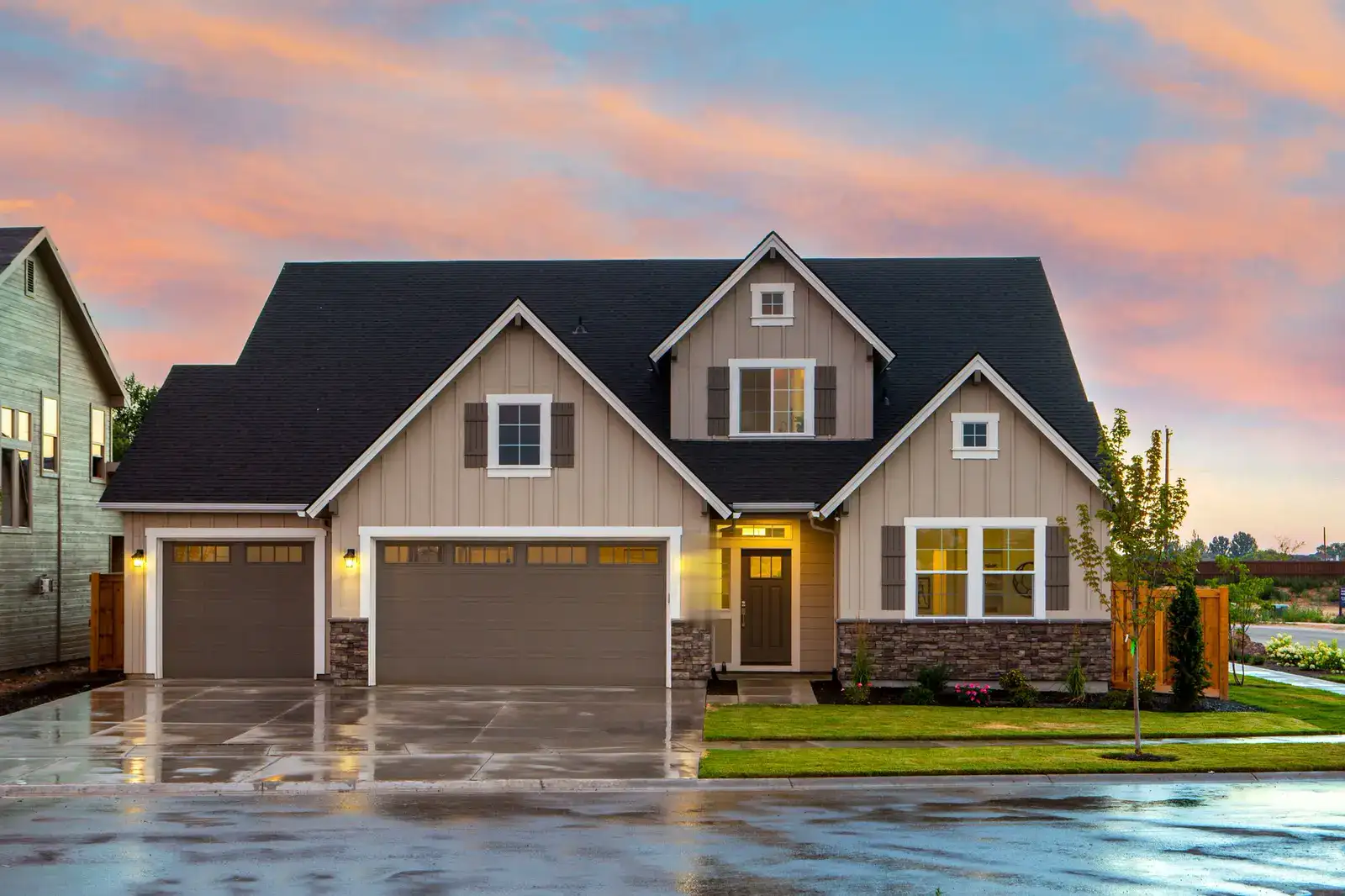
Photo by Binyamin Mellish on Pexels. The house is in Boise, Idaho. It is not an Orange County listing and it is not an ADU.
Frequently asked questions
Does California still require the owner to live on a property with an ADU?
No. A city cannot impose an owner-occupancy requirement on an ADU. A junior ADU that shares sanitation with the main house is different: the owner then has to live in the house or in the JADU.
Are side and rear setbacks for a new ADU limited to four feet?
Yes. A city may require side and rear setbacks for a new attached or detached ADU, and those setbacks cannot be more than four feet. A conversion of existing space, or a rebuild in the same footprint, does not take a new setback. A front setback can still apply.
Can the city hold a hearing on a compliant ADU?
No. A compliant ADU or JADU is reviewed ministerially, on objective standards, without a discretionary hearing. The city still checks the plans, and a coastal permit can add its own review on a 60-day clock.
Will an ADU raise the sale price by what it costs to build?
No. A permitted unit can support a higher price when comps with a similar legal unit sell for more. The added price is whatever those comps support. It is not a refund of the construction budget.